
"There are 60 coffee-producing countries in the world"
400 article(s) found

Sidamo Coffee Bean Introduction, Sidamo Coffee Growing Flavor
Pay attention to the coffee comment (Weixin Official Accounts vdailycom ) and discover a beautiful cafe to open its own shop Name: Ethiopia Democratic Federal Republic (Ethiopia) Location: Located in the plateau of northeastern Africa. Neighboring countries: North Eritrea, South Kenya, East Somalia Djibouti, West Sudan Land area

Colombian coffee is one of the individual coffees sold in the world under the name of the country.
Coffee was first introduced to Colombia in 1808 when it was brought by a priest from the French Antilles via Venezuela. Today, the country is the second largest producer after Brazil, with an annual output of 13 million bags of 60 kg each, while Brazil produces 22 million bags a year. The status of coffee in Colombia can be seen in the following examples-all entering the

Characteristics of Colombian coffee beans story how should Colombian coffee be roasted?
Professional baristas follow the Coffee Workshop (Wechat official account cafe_style) in 1808, coffee was first introduced to Colombia (Colombia) and today the country is the second largest producer after Brazil, with an annual output of 13 million bags of 60 kg each, compared with Brazil's annual production of 22 million bags. Colombian coffee is one of the few individual coffees sold in the world under the name of the country. In

Characteristics, uses and Origin of Ugandan Coffee & production Survey of Coffee products in Uganda over the years
For the exchange of professional baristas, please follow the coffee workshop (Wechat official account cafe_style) Uganda is a landlocked country in East Africa, known as the "Pearl of Africa". Because of the dependent colonial economy, coffee accounts for most of the export income. Coffee beans are a major commodity in global trading volume second only to crude oil, and the rise or fall of prices is related to coffee beans.

The planting temperature of coffee tree is between 15 degrees and 25 degrees.
The origin of the coffee tree is Ethiopia in Africa. In botany, coffee trees belong to the evergreen trees of the subgenus Rubiaceae, and coffee beans, commonly known as coffee beans, are actually the seeds of the fruit of coffee trees. They are called coffee beans only because they are shaped like beans. Climate is the decisive factor for coffee cultivation. Coffee trees are only suitable for growing in the tropics or subtropics, so latitude 25 degrees south and north.

Brief introduction of Silver Mountain Manor in St. Thomas
Typica with low quantity and good quality is the best variety of Arabica. Most coffee-producing countries are only willing to grow other varieties with high yield but poor quality, but Jamaica gives priority to quality, preferring to sacrifice the production of Blue Mountain coffee in exchange for the best quality of Blue Mountain coffee. Jamaica is one of the regions with low coffee production in the world, with an annual harvest of about 40000 bags to 60 metric tons.

Colombian Coffee Culture Colombian Coffee growing Environment
The largest producer of quality coffee in the world! The traditional deep-roasted coffee has a strong and memorable flavor. In 1808, coffee was first introduced to Colombia, which was brought by a priest from the French Antilles via Venezuela. Today, the country is the second largest producer after Brazil, with an annual output of 13 million bags of 60 kg each.

The planting conditions of high-quality coffee beans and common sense coffee trees
The origin of the coffee tree is Ethiopia in Africa. In botany, coffee trees belong to the evergreen trees of the subgenus Rubiaceae, and coffee beans, commonly known as coffee beans, are actually the seeds of the fruit of coffee trees. They are called coffee beans only because they are shaped like beans. Climate is the decisive factor for coffee cultivation. Coffee trees are only suitable for growing in the tropics or subtropics, so latitude 25 degrees south and north.

Jamaican Coffee Manor with long-lasting Fruit Flavor characteristics of Yinshan Manor
One might ask, what is so special about Jamaican Blue Mountain Coffee? The answer is everything about it. The real Blue Mountain Coffee is one of the most advantageous coffee growing conditions in the world. The weather, geological structure and topography of Jamaica provide a unique ideal place. The designated Jamaican Blue Mountain Coffee can only be grown in the Blue Mountain area, north-east of the island of Jamaica in Kingston.
Flavor characteristics of Bolivian Rosa Coffee beans the story of Bolivian Rosa cousin Java Coffee
Professional coffee knowledge exchange more coffee bean information please follow the coffee workshop (Wechat official account cafe_style) Bolivia is an interesting place, although it is known as the paradise of coffee growth, but its production has not been high. Qianjie Coffee has been served in Bolivian coffee several times, and its exquisite flavor is very impressive. The history of Bolivia is very interesting, though

Burundian Ngozi Coffee single Bean hand-flushing sharing _ cultivation of Ngozi Coffee in Burundi
For more information on coffee beans, please follow the coffee workshop (Wechat official account cafe_style) Burundi is a small landlocked country located at the intersection of Central and East Africa, as well as the watershed between the Nile and the Congo River, so it is known as the Heart of Africa. In this country, like most East African coffee-producing countries, there is no conceptual manor, but coffee is matured by small coffee farmers.

Description of the flavor of Lanshan coffee beans with a particularly long-lasting flavor introduction to the production area of grinding scale varieties
Blue Mountain Coffee can maintain its top status today, which is closely related to the local management policy. In 1932, Jamaica reduced the island's dependence on sugar exports through policies to encourage coffee production. Unlike most coffee-producing countries, the local government does not plant a large number of high-yield and poor-quality coffee in order to increase the output value, but prefer to sacrifice the output to ensure the quality.

The Central Mountains of Madagascar | the flavor of washed Arabica and Robusta coffee beans?
Professional coffee knowledge exchange more coffee bean information please follow the coffee workshop (Wechat official account cafe_style) Madagascar's Central Mountains | what is the flavor of washed Arabica and Robusta coffee beans? Producing area: the central mountain range of Madagascar. Altitude: 3600-4900 feet, natural organic pollution-free, fertile volcanic soil type. Environment: annual average temperature 24 ℃
Harald Gimar Kim Bilim of Costa Rica Coffee country Sidamo Yega Chuefei
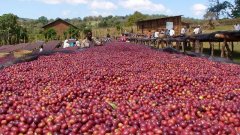
Ethiopia is called the hometown of coffee, not only because it is the earliest birthplace of coffee in the world, but also because it is a place where coffee is everywhere. There is a custom in this birthplace of coffee that no matter how poor and miserable people are, they must have a coffee pot and a charcoal stove in their home. Because the local people think they have to

Description and treatment of Coffee Flavor in Tianyi Manor, Nicaragua
Lake Nicaragua is the largest lake in Central America, located in southwestern Nicaragua. The local Indians call it Lake Corsi Walka, which means freshwater sea. Lake Nicaragua is 160km long, with an average width of 60km and an area of 8264 square kilometers. Tens of thousands of years ago, Lake Nicaragua was an bay of the Pacific Ocean, cut off from the sea by volcanic eruptions. With the passing of the sun and moon, the water of the lake gradually

Why do coffee farmers take part in the C.O.E coffee cup test? COE coffee competition mode
Professional coffee knowledge exchange more coffee bean information please follow the coffee workshop (Wechat official account cafe_style) COE, the full name is Cup of Excellence, translated into excellent cup, extraordinary cup or extraordinary cup in Chinese. The organizer ACE (Alliance For Coffee Excellence) picks out thousands of coffees from member States every year and selects a batch of high-quality coffee through domestic cup test reviews.
What are the common ways to handle raw coffee beans? What is the difference between solarization and washing? Coffee-producing country
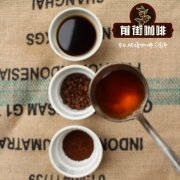
Professional coffee knowledge exchange more information about coffee beans Please follow the common handling methods of raw coffee beans in the coffee workshop (Wechat official account cafe_style). What is the difference between solarization and washing? What is the grading system of raw beans in large coffee-producing countries? 1. Grading: after the seeds are taken out, the seeds are screened and graded, and Guatemala, Costa Rica and other countries are rated according to the planting height.
Introduction to the types of coffee beans in Kenya, grown in coffee-producing areas in Kenya
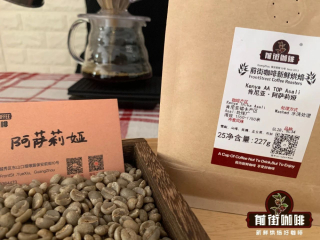
Following Caf é (official Wechat account vdailycom) found that the Beautiful Caf é opened its own shop in 1878, when the British brought coffee to Africa and set up a coffee plantation in Kenya in the 19th century, when Ethiopian coffee drinks were imported to Kenya through Southern Yemen.

Coffee cultivation and development in Cuba
Coffee farming in Cuba began in the mid-18th century, with the first coffee farm established by Don Jos Gelabert in Wajay, outside Havana, in 1748. A large number of French and submarine immigrants followed after the outbreak of the Haitian Revolution in 1789.

Boutique coffee beans-details of Yega Xuefei, Ethiopia
Ethiopia has one of the oldest coffee histories in the world. Traditionally, Ethiopian coffee beans are exposed to the sun, and the whole process is very extensive, so there are many defective beans, uneven quality and difficult to control. However, since the study and introduction of Central and South American washing technology and processing and drying methods, the quality of raw beans has been greatly improved, making Ethiopia's washed beans not only